Saturday, August 14, 2010

Indoor Skydiving: Possible Accidents While Sky Dive

A skydiving accident can be caused by a variety of factors, but some more common causes include collisions between jumpers, difficulty during landing, and malfunctioning equipment. Despite the prevalent myth that equipment problems are the biggest culprits for causing accidents, operator error is actually the root cause the majority of the time.

Collisions are often the result of parachute canopies deploying too close together. Many landing difficulties are attributable to skydivers overestimating how much time they have to complete turns and other maneuvers, or landing near obstacles. A few landing fatalities involve drowning related to landing in water. Equipment malfunctions rarely involve failure of the parachute or reserve to deploy, as may be a common belief, but more often involve lines that become entangled.
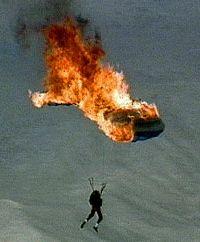

Another misconception about a skydiving accident may be that novices are most often the victims of accidents, but students are actually rarely involved in accidents. More experienced jumpers who try maneuvers requiring a high level of skill are more likely to experience a parachuting accident. Accidents took the lives of 21 people in 2004, down from 25 in 2003, 33 in 2002, and 35 in 2001, some of which may have did a jump without parachute.

A comparison of the statistics regarding skydiving fatalities with fatality statistics from sports that may be considered less risky, such as scuba diving, shows that parachuting actually poses less of a risk than most people perceive. For example, according to reports, approximately 30 out of 100,000 skydiving participants are killed in the United States each year. This rate compares to 47 out of 100,000 for scuba diving, 50 out 100,000 for mountain climbing, and 67 out of 100,000 for hot air ballooning. So don't let safety fears scare you from making that first skydive.

On an interesting note, history includes a few cases of people who have survived a jump without parachute from very high altitudes. Some notable survivors of these jumps were airmen from World War II. One fighter pilot was forced to jump from his bomber plane when it came under enemy fire in France. He fell 20,000 feet, crashed through a skylight on the roof of a train station, sustained severe injuries, and eventually recovered. Other scenarios involved airmen leaving their planes for the same reason and falling anywhere from 18,000 to 22,000 feet and surviving because their fall was broken by trees and snow drifts.


Andrew Caxton is a consultant who writes on many consumer topics like the above article at [http://www.skydiving-parachuting-guide.com]. For additional information regarding Skydive or parachutes go his skydiving lessons [http://www.skydiving-parachuting-guide.com/learn-how-to-skydive.html] article

Monday, August 2, 2010

Indoor Skydiving: Where to Skydive in Oregon

The breathtaking scenery of Oregon includes oceans, mountains, and deserts. The seas of the Pacific Ocean dance across beaches of beautiful white sand; the mountains: majestic peaks dancing with the hues of the horizon; the desert: a parched, yet inviting, parcel that longs for your interest. Of these spectacles, an unlikely addition enlists attention; far above the horizon, a minuscule spec draws the eye. A bird....a plane? An insane fanatic that has abandoned a perfectly good aircraft? Bingo!! While not completely insane, skydivers have taken to the air in droves to experience the scenery at a never before seen viewpoint. Oregon from the sky has prove to be an ever inviting objective for skydiving fanatics and mere admirers alike.


Over the years, five major skydiving centers have emerged in Oregon: Eugene Skydivers, Central Oregon Skysports, Skydive Eagle Creek, Skydive Oregon, Inc. and Wright Brothers Skydiving.

  • Eugene Skydivers, offering tandem, AFF, and static line jumping, this facility does not boast many of the commercial amenities as others, but provides lower costs as a result of this.
  • Central Oregon Sky Sports, providing an incredible view of the Cascade Mountains, offers tandem and static line jumping. This site also focuses on the basics and does not offer many amenities.
  • Skydive Eagle Creek, offering tandem and static line jumping, is one of the less known drop zones in Oregon. Although it does offer some additional amenities, such as a pool, this facility is a little less popular than its counterparts.
  • Skydive Oregon, Inc. is an incredibly prevalent drop zone. Offering tandem and AFF, this facility is known for constantly having planes in the air and having some of the most exceptional planes in the industry.
  • Wright Brothers Skydiving, offering tandem and static line jumping, also offers all the basics in a skydiving drop zone. Although there is no pool or bar, this facility is held in the best regard as being one of the best in the business.
No matter your experience level, you owe it to yourself to experience the breathtaking beauty of the Oregon countryside. While ground level is impressive, it is nothing to compare with a bird's eye view.


Andrew Caxton is a reliable journalist who has published more articles on this issue for http://www.skydiving-parachuting-guide.com He provides tips and advice about sky diving as well as on the best drop zones for your first skydive lessons

Indoor Skydiving: Going Indoor Skydiving in California at a Discount

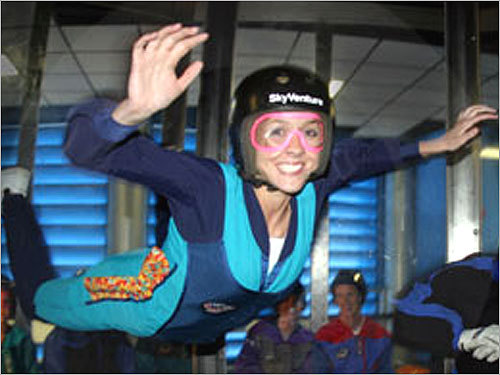
What is indoor skydiving? Indoor skydiving, otherwise known as tunnel flying or bodyflight, is a recreational activity that allows people to fly inside a vertical wind tunnel. The tunnel moves air up and down with winds of about 120 mph, which is the terminal velocity of a person falling facing down. In the skydiving community, vertical wind tunnels are used for training and practice. It allows skydivers to test new tricks, push their limits, and decrease the risk.

There are two main types of wind tunnels: indoors and outdoors. Most people call it indoor skydiving, but there are some tunnels that have no walls. These tunnels are used very much in the movie industry in an effort to film people in flight in the outdoors. These outdoor wind tunnels can be portable and taken just about anywhere.


Jack Tiffany was the first person to fly in place in 1964 at the Wright Patterson Air Force Base. This was a private concept until a company called Aerodium developed a commercial version for the mass market in 1979. The first commercial bodyflight facility was built in Las Vegas, Nevada.

There are several places to go indoor skydiving in California. The three locations are in Los Angeles, Union City, and Perris. The Los Angeles location is in Universal City Walk in Universal Studios. Indoor skydiving in Los Angeles can be tried for under $40 and is a sure winner. The Union City facility is pretty amazing and much larger than the one in Universal. It's a bit more expensive, but indoor skydiving in San Francisco is an experience you just have to have. The Perris location also offers real skydiving. So, you could see how you feel in the tunnel and then do the real thing by jumping from a plane. Perris also offers package deals for a combination of skydiving and a bodyflight.

Bottom line is this: if you haven't tried indoor skydiving in California, you are missing out. It is truly an amazing adventure that pretty much everyone should try at some point. If you are afraid of heights, this is most definitely for you. If you have any questions about this, find Kijubi and ask them. They will guide you to the activities that best fit your needs and desires. Have a great time!


Kijubi.com is an experience marketplace that allows consumers to search, browse, and purchase recreational activities and things to do.